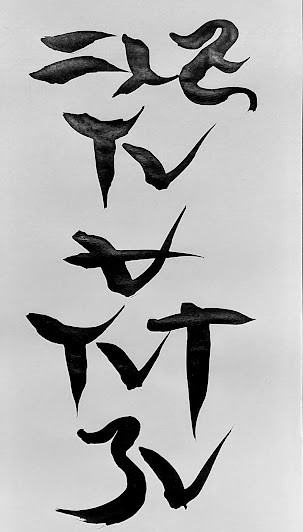
A couple of years ago, we were doing what people usually do in malls: walking without urgency, half-bored, half-curious, letting time pass. Then we saw him. A man seated behind a small booth in the middle of the mall, quietly writing something that did not look familiar. The letters were elegant, deliberate, almost ceremonial. Scripts, he said. Kulitan or Súlat Kapampángan, written in exchange for a donation.
I had grown up knowing I was Kapampangan, yet somehow, I had never heard of this script. I knew Baybayin, of course. It shows up in textbooks, tattoos, Instagram bios. But Kulitan? That day was the first time I learned that Kapampangans had their own writing system, just as ancient and just as powerful.
When it was my turn, I asked him to write my name. He did, carefully, on a white bond paper. As I watched the strokes form, I realized this was not just writing. It felt like watching art emerge. When he handed it to me, I was struck by how alive it looked. Balanced. Intentional. Like it carried a memory older than any of us standing there.
TL;DR
- I discovered Kulitan by accident at a mall booth
- Kulitan is the indigenous Kapampangan script, older than the Latin alphabet
- It is an abugida written vertically, unlike any other Philippine script
- The script survived colonization through resistance and secrecy
- Today, Kulitan is being revived through art, education, and technology
What Exactly Is Kulitan?
Kulitan is not just an old way of writing words. It is a direct link to the pre-colonial Kingdom of Luzon, a reminder that Kapampangan culture had its own systems of knowledge long before colonization reshaped daily life.
Unlike the Latin alphabet we use today, Kulitan is an abugida, also known as an alphasyllabary. Each basic character already contains a consonant and a vowel sound. These base characters are called Indûng Súlat, or mother characters. Through the use of diacritical marks, they produce Anak Súlat, or offspring characters, modifying the vowel sound while keeping the consonant intact.
This structure makes Kulitan efficient and deeply symbolic. Writing is not just mechanical. It mirrors family, lineage, and continuity. A mother character quite literally gives birth to new sounds.
What truly sets Kulitan apart, though, is its orientation. It is the only indigenous Philippine script traditionally written vertically from top to bottom, with columns moving from right to left. This direction is said to represent the movement of the sun, rising in the east and setting in the west. Writing becomes cosmology. Language follows nature.
A Script That Refused to Disappear
When Spanish friars arrived in the 16th century, they brought with them the Latin alphabet, reshaping how Filipinos read, wrote, and recorded history. Many indigenous scripts faded into obscurity. Kulitan did not entirely vanish, and that survival was not accidental.
Instead, it went underground.
Kapampangan revolutionaries and intellectuals like Aurelio Tolentino and Zoilo Hilario continued to use Kulitan as a tool of resistance. They wrote anti-colonial propaganda in the script, shielding their ideas from colonial authorities who could not read it. In this context, Kulitan was no longer just cultural. It was tactical.
Writing in Kulitan became a quiet rebellion. A way to preserve identity while actively resisting erasure. It allowed Kapampangans to speak to each other in plain sight, yet remain unseen by colonial power.
Kulitan in the Present Day
Today, Kulitan is no longer hidden, but it is still fighting for space.
Cultural groups like Ágúman Súlat Kapampángan and institutions such as Sínúpan Singsing have been instrumental in reviving the script. Their work reframes Kulitan not as a relic, but as a living system of writing.
Workshops and Education
Cities like Angeles in Pampanga regularly host lecture-workshops for beginners. These sessions demystify the script and make it accessible to students, artists, and cultural workers.
Art and Tattoos
“Batik Kulitan” has become popular among the youth and Kapampangan expatriates. Wearing the script on skin is not just aesthetic. It is a declaration of identity.
Technology and Unicode
There are ongoing efforts to officially include Kulitan in Unicode. This would allow it to be used across digital platforms, from websites to mobile apps. Survival today requires visibility online.
Turning Memory Into a Logo
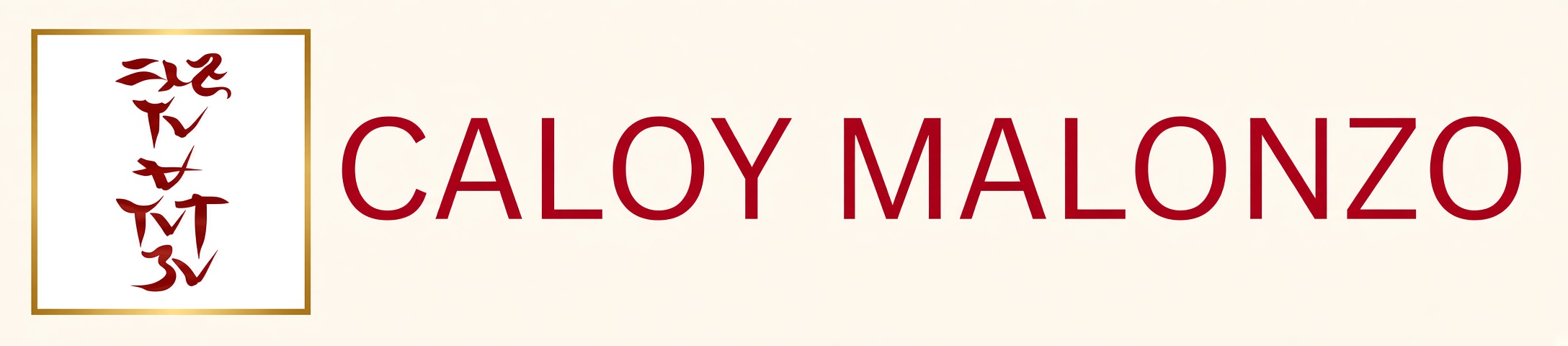
While thinking about a logo for this blog, I kept coming back to that white bond paper from years ago. The handwritten Kulitan version of my name. It felt wrong to let it stay folded in a drawer, unseen and unused.
So I decided to digitize it.

I transformed that artwork into a logo, not to modernize Kulitan, but to let it speak in a new medium. It now represents my curiosity about Philippine ancient cultures and my personal connection to my Kapampangan roots. It is a reminder that identity can be rediscovered accidentally, even in the middle of a mall.

Why This Still Matters
Kulitan is not just something to admire once and forget. It challenges how we think about history, language, and identity. It asks uncomfortable questions. What else did we lose without noticing? What else is waiting to be rediscovered?
