
There’s a specific kind of letdown that comes from paying more for less, and that’s exactly what happened with this buko pie. I went in expecting the classic combination of tender coconut meat and buttery crust, the kind that makes buko pie worth seeking out in the first place. What I got instead was something closer to a custard tart wearing a buko pie’s name.

At ₱400, this isn’t a cheap treat. It’s priced above several benchmark brands that consistently deliver more coconut and better crust. So the question became simple: does it earn that premium? The short answer is no, and here’s the breakdown of why.
TL;DR
- Rated 2/5 stars, mainly due to filling composition and crust quality
- The pie slices cleanly and holds its shape well
- Filling is dominated by thickened cornstarch base rather than coconut meat
- Coconut strips are thin and sparse instead of thick and layered
- Texture leans pudding-like, closer to maja blanca than a traditional buko pie
- Crust is soft and underbaked, with no browning or flaky lamination
- At ₱400, it costs more than benchmark brands (₱250–₱350) that offer more coconut and a better crust
First Impressions and Presentation
Structurally, this pie does one thing well. It cuts cleanly and holds its shape on the plate without falling apart, which isn’t nothing when you’re dealing with a custard-based filling. That’s about where the good news ends on presentation.
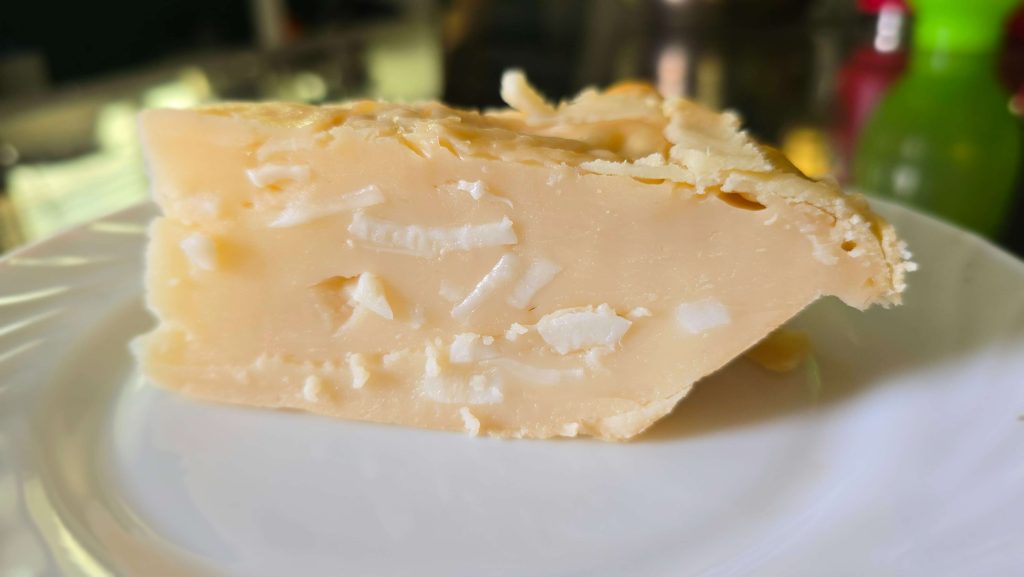
The crust comes out pale, without the golden color you’d expect from a properly baked pie shell. Slice into it and the cross-section is glossy and gelatinous, more like a set custard than a fruit-forward filling. Before you even taste it, the visual already tells you this pie is going to lean heavy on starch.
The Filling Doesn’t Hold Up
This is where the pie loses the most ground. The ratio here is badly skewed toward thickened cornstarch and custard base, with actual coconut meat playing a minor supporting role instead of being the star.
What coconut is present comes in thin, sparse strips rather than the thick, layered meat that makes a good buko pie feel substantial. The result is a mouthfeel that’s heavy and pudding-like, closer to maja blanca than to a tender, fruit-packed bite. If you’ve had a buko pie where every forkful gives you real coconut texture, this is the opposite experience.
Crust Quality Falls Short
A good buko pie crust is supposed to do one job: provide a crisp, buttery contrast to the soft filling. This one doesn’t do that job.
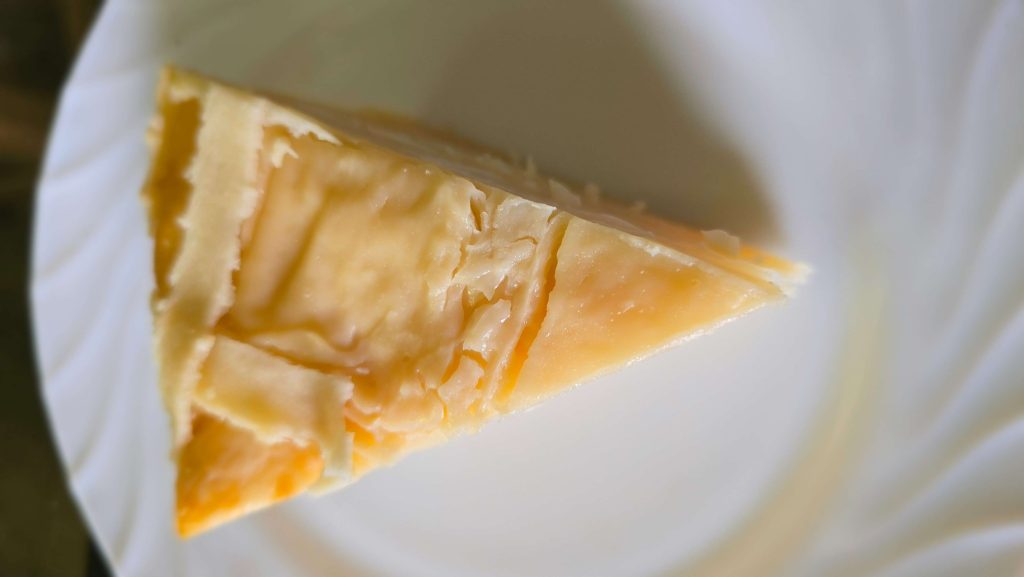
The crust comes out soft and underbaked in appearance, missing the browning and flaky lamination that signal a properly baked shell. Instead of contrasting the dense filling, it adds more moisture to an already heavy pie. Two textures that should be working against each other end up blending into the same soft, wet bite.
Flavor Is Sweet, Starchy, and Muted
The flavor profile follows the same pattern as the texture. It’s predominantly sweet and starchy, with the fresh coconut flavor muted rather than upfront.
Traditional buko pie has a natural richness that comes from real coconut meat balancing the sweetness of the filling. That balance is missing here. What’s left is a pie that tastes more like a sugar-and-starch dessert than one built around coconut.
Price and Value for Money
At ₱400, the cost-to-ingredient ratio doesn’t add up. You’re paying a premium price for a filling built mostly on cheap cornstarch and sugar, not fresh coconut meat.
That gap becomes more obvious when you compare it to benchmark buko pie brands, which typically run ₱250 to ₱350 and offer noticeably more coconut density along with better crust quality. Paying more for less isn’t a great position for any product to be in, and this pie lands squarely there.
Key Takeaways
- A clean slice and solid structure don’t make up for a weak filling
- Filling composition matters more than presentation when judging a buko pie
- Thin, sparse coconut strips signal a filler-heavy pie rather than a traditional one
- Crust needs browning and lamination to actually contrast the filling, not just exist
- A pudding-like, maja blanca texture is a sign the pie has strayed from what buko pie is supposed to be
- Price should reflect ingredient quality, and here it doesn’t
- Benchmark brands in the ₱250–₱350 range currently offer better value on both coconut content and crust
Final Verdict
This pie is easy to cut, easy to serve, and easy to plate. What it isn’t is a meat-packed buko pie, which is the one thing it needed to be. Between the muted coconut flavor, the soft underbaked crust, and the pudding-heavy filling, it reads more like a custard tart that borrowed a familiar name.
At ₱400, it’s hard to recommend over the ₱250 to ₱350 options that deliver more of what actually matters in a buko pie. If you specifically want a firm custard tart, this might work for you. If you’re after a traditional, coconut-forward buko pie, skip this one and put your money toward a brand that gets the fundamentals right.
